Pioneering Sustainable Design: The Letright Approach
A read on embedding sustainability from product design rather than as an afterthought. One industry champion, Letright, gives insights on doing things right.



APA7: Timothy,B., Ager, F., & Balakrishnan, S. (2024). Pioneering Sustainable Design:The Letright Approach.
Chicago Mannual of Style (CMOS 18): Timothy, Benson, Freddy Ager, and Shanggari Balakrishnan. 2024. PioneeringSustainable Design: The Letright Approach.
Cite The Right Harvard 12: Timothy,B., Ager, F. and Balakrishnan, S. (2024) “Pioneering Sustainable Design: TheLetright Approach.”
MLA9: Timothy, Benson, et al. Pioneering Sustainable Design: The Letright Approach.2024.
Abstract
Copyright
Published by the ACES Institute
Published on 16th August 2024
Serial Number: AI240816-TA103
Kuala Lumpur, Office Block #1-2, 48
Jalan Tun Mohd Fuad, TTDI, 60000
Malaysia
Copyright © 2024 ACES Institute.
All rights reserved
Email: connect@acesinsittute.org
Website: www.acesinstitue.org
Key Findings
SUSTAINABILITY IN DESIGN
Sustainability is among the core concerns in business approaches. It entails optimizing social, economic, and environmental factors to ensure current production demands are satisfied without compromising those of future generations [1], [2]. Designing sustainable solutions is critical for supporting the social and human development of individuals and societies around the world, as well as contributing to the attainment of the Sustainable Development Goals. Responsible Research and Development (R&D) can be used to achieve environmental and social responsibility while still ensuring economic viability. More than 80% of a product's environmental impact is established at the design stage showing that the success of producing an eco-friendly product lies in the efforts made during its design [3]. Incorporating environmental factors at the design stage may also have several long-term merits such as being cheaper and more efficient than using risky and costly retrospective measures to reduce impact [4]. However, sustainability efforts have mainly focused on the mid and later stages of products’ life cycle, notably during manufacturing, consumption, and end-of-life often leading to unethical extraction of resources, environmental harm and health concerns, non-recyclable waste generation, and the additional expenditure of money and time to address these emerging issues [5]. Eco-design is an approach that aims to reduce the environmental consequences of products across their entire life cycle while maintaining or improving performance for the end user [6]. Research and Development is a critical tool for developing sustainable designs as it allows for the accumulation of knowledge required to ensure that sustainability initiatives improve people's lives while also protecting the environment [7]. Letright Industrial Corp. exemplifies the application of sustainable design and highlights the importance of functional R&D.
LETRIGHT INDUSTRIAL CORP: A BEACON OF SUSTAINABLE INNOVATION
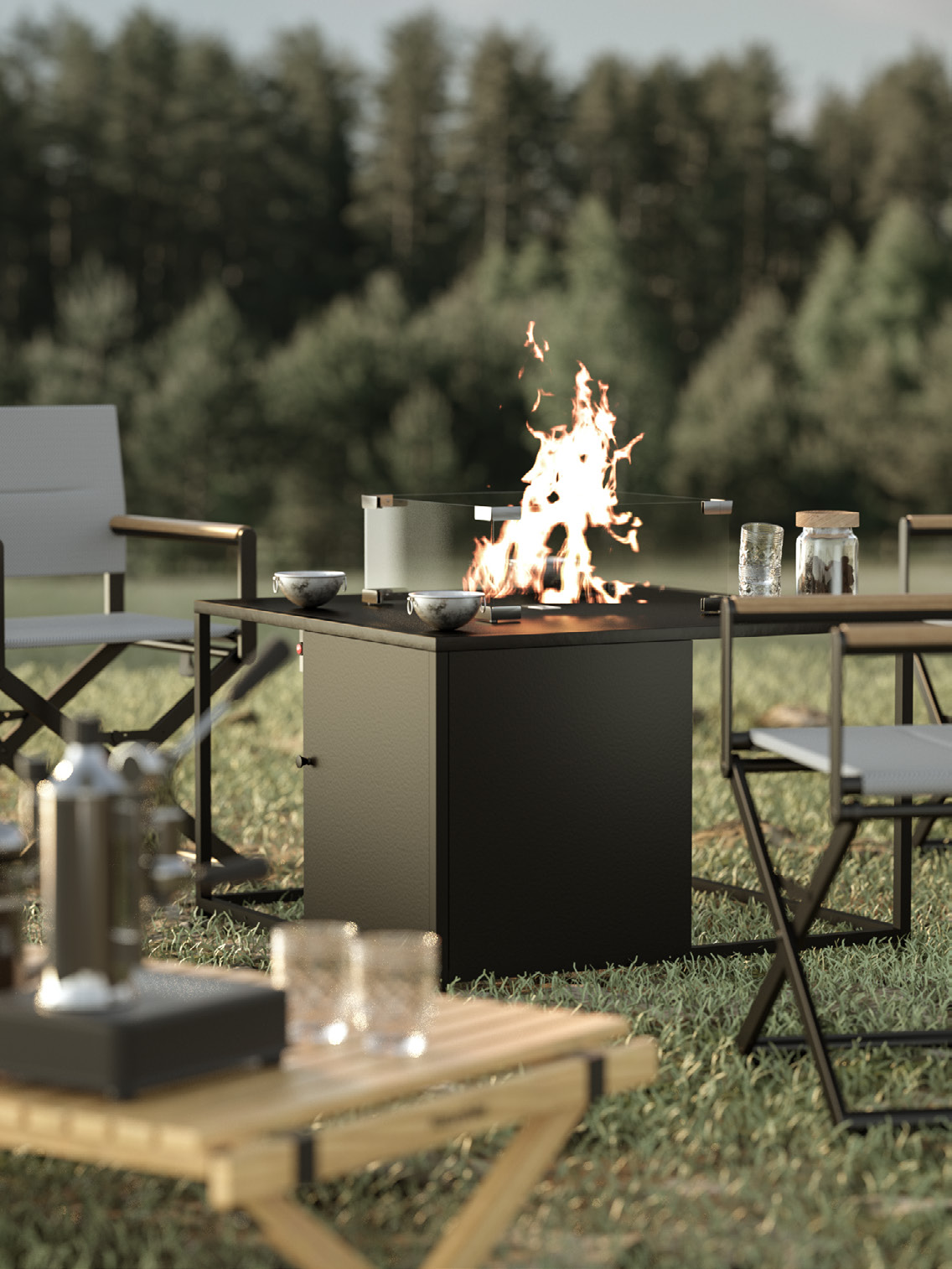
etright Industrial Corp. Ltd. is a leading outdoor product manufacturing company headquartered in Hangzhou, China. The organization endeavors to use recyclable materials for its outdoor products with the sole purpose of addressing customers' aesthetic preferences while ensuring environmental responsibility. It envisions becoming a global producer of sustainable and environmentally friendly outdoor living products which aligns with global efforts to mitigate climate change, reflecting a commitment to both profitability and social responsibility. With an understanding of the role of research and development in promoting innovative designs, the company has given priority to the R&D department. According to Letright’s organizational hierarchy, the R&D occupies a position of influence and reports directly to the CEO which makes it highly important in terms of the organizational strategic goals and operations. The direct access and communication between the leadership and R&D ensure a smooth and effective collaboration, ultimately ensuring that the end products reflect the company’s vision and strategic priorities. So far, the Letright Industrial Corp has supplied more than 200 new products to North American, European, and Australian markets [8].
GLOBAL INDUSTRY TRENDS AND CHALLENGES
There has been consistent global growth in the outdoor furniture industry, and this is expected to continue in the next decade. The outdoor furniture industry is currently valued at approximately US$52.10 billion and is projected to grow by about 3.6% annually between 2024 and 2029 [9]. This industry is characterized by an increasing demand for sustainable and eco-friendly products, necessitatin state-of-the-art technologies that enable mimicking certain raw materials such as wood and the creation of innovative products that are both efficient and environmentally friendly. Although the industry presents a significant potential for business growth, it has also faced major criticism due to the associated risk of environmental degradation through outdoor products requires high energy use, especially due to coating processes required to ensure high-quality wood products [10], contributing to higher carbon emissions and thus influencing climate change. Given the significant impacts of the outdoor manufacturing industry, governments across the world have developed and implemented policies to ensure eco-friendly production processes. For example, in China, the 1989 environmental protection law was revised in 2014 making it mandatory for businesses to engage in green innovation as a basic national policy. These policies require companies that have high energy consumption and pollution to create green innovations to ensure sustainable processes [11].
INTEGRATING SUSTAINABILITY AT EVERY STAGE
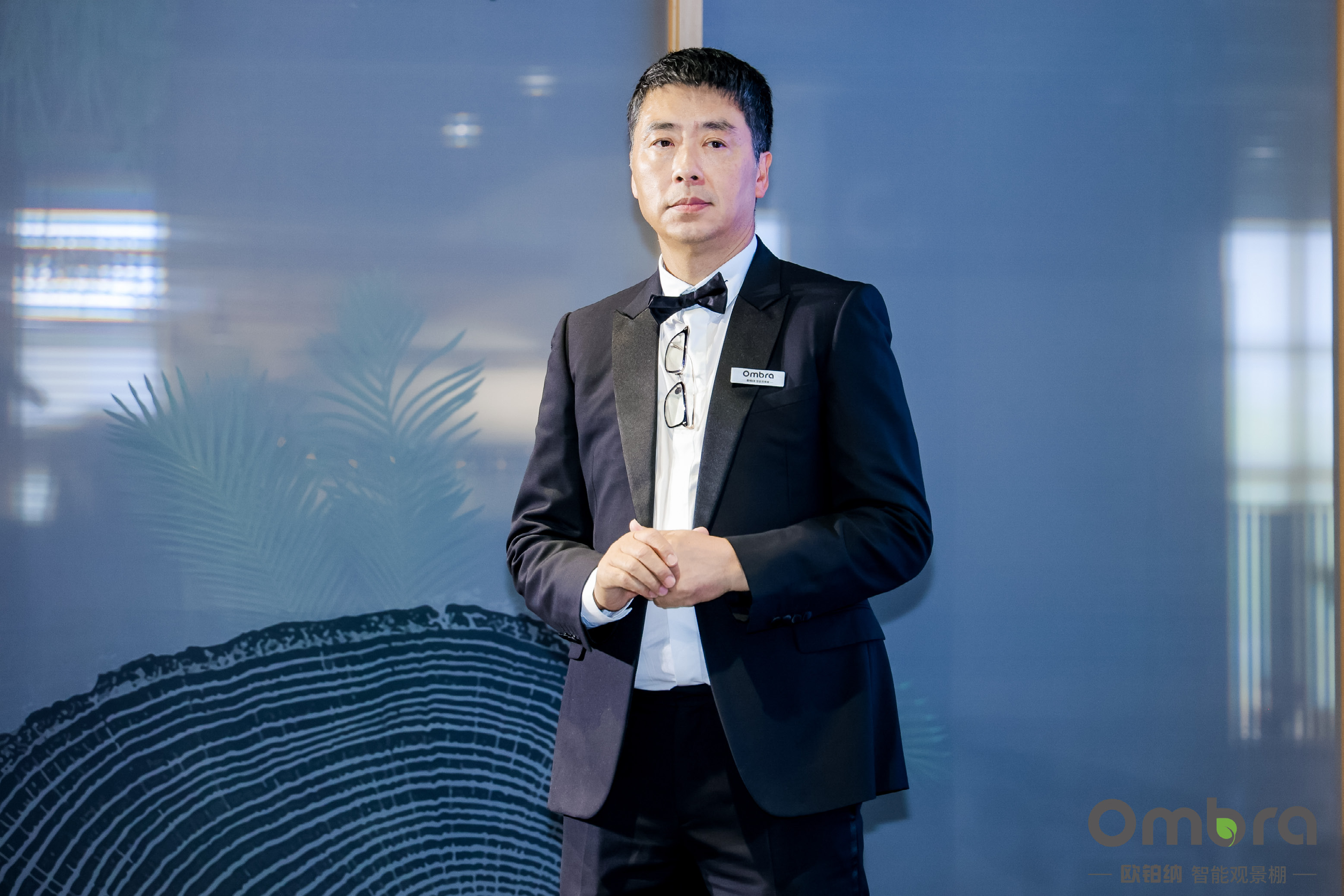
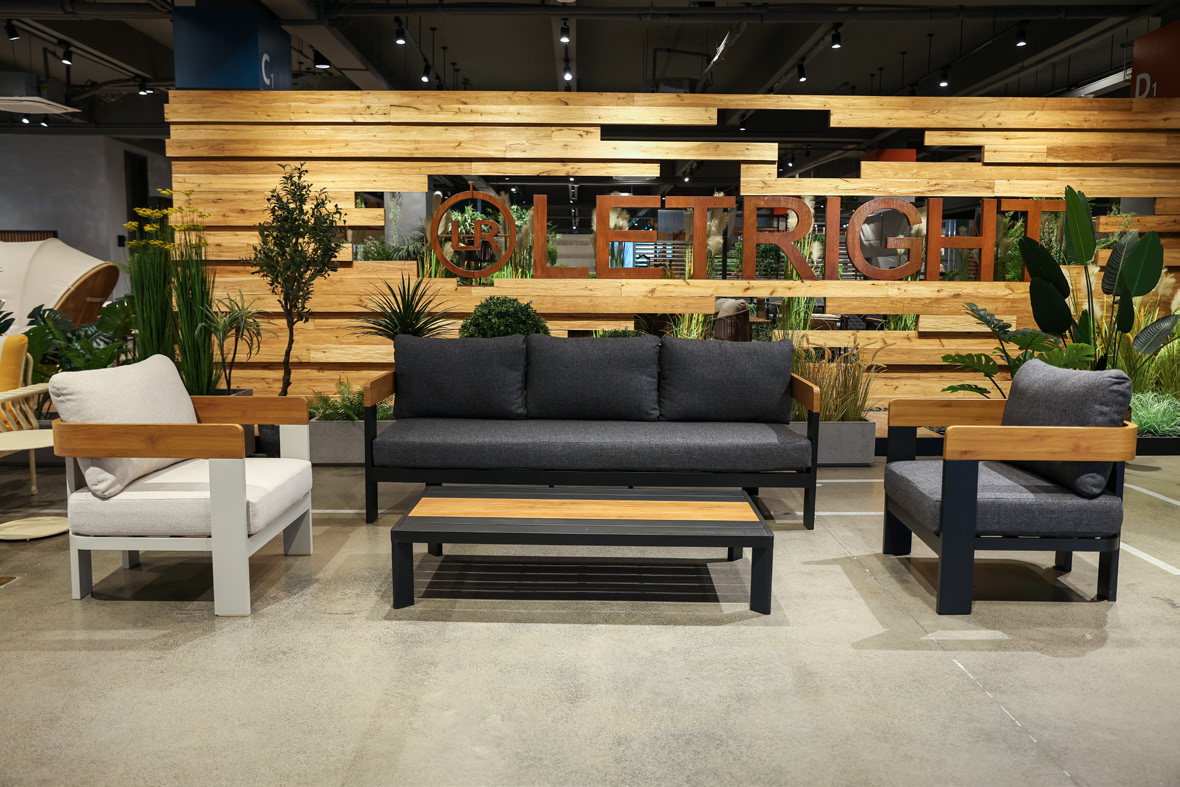
Integrating sustainability into product design rather than as an afterthought can ultimately lead to substantial savings, including finances and time by encouraging effective resource use [5]. Letright has invested in R&D to ensure their designs meet their sustainability goals and are acceptable in the market. Meo Ruan Jiaqiong, the design director at Letright emphasized that environmental protection has been a core focus for the company over the past decade. The company began analyzing the impact its production processes had on the environment during the beginning of the 21st century after realizing its most common raw material, wood, was causing significant damage to the environment. As a result, it invested in the R&D department to identify innovative and eco-friendly solutions that would ensure a smooth and sustainable production process.
CULTURAL NUANCES: TAILORING DESIGNS TO GLOBAL PREFERENCES
The R&D department helps identify regional differences and how they influence customer tastes and preferences. As a result, Letright acknowledges that different markets have varying needs depending on aspects such as weather patterns, customer preferences, and applicable regional and local regulations. Although the company’s main design team is based in China, it hires several external expatriates in countries such as Europe and America to ensure cultural integration and product marketability in the host country. In today's global economy, cultural differences can have a substantial impact on international corporate operations. Letright, thus stresses the importance of understanding these differences as foundational design approaches for products meant for export. To eliminate or limit the barriers associated with cultural factors, it is therefore critical for those operating in the international market to diagnose the culture of the host country and design strategies in different markets based on this information [12].
STAYING AHEAD WITH MARKET TRENDS
Another important factor influencing design is dynamic market trends. Through the R&D department, the company analyzes market trends continually and adapts accordingly by developing practical solutions. Letright Industrial Corp. has established a trends department dedicated to continually analyzing evolving environmental protection practices. The company distinguishes itself by debunking traditionally held ideologies and practices that focus solely on product recyclability. According to Meo, Letright’s design director:
Initially, people might have focused only on whether materials were recyclable or where they came from. But over time, we realized that environmental protection is a broader concept that encompasses the entire product lifecycle from production to disposal.
SS-5: LETRIGHT’S FORMULA FOR SUSTAINABLE APPROACHES
To facilitate continuous adaptation, the designers are therefore required to share a trend report that incorporates new environmental concepts and practical applications of green design annually. Consequently, market trend analysis birthed a design philosophy called SSR-5, which accounts for about 80% of Letright’s overall design considerations, while eco-friendliness makes up the remaining 20%. This philosophy emphasizes product affordability and customer comfort for their target markets. While the organization is committed to creating eco-friendly products, it also strives to ensure product acceptance in international markets, hence the need for taking multiple considerations into account. The trends analysis highlights the crucial role of R&D in shaping their overall design approach.
MATERIALS MATTER: CHOOSING ECO-FRIENDLY ALTERNATIVES
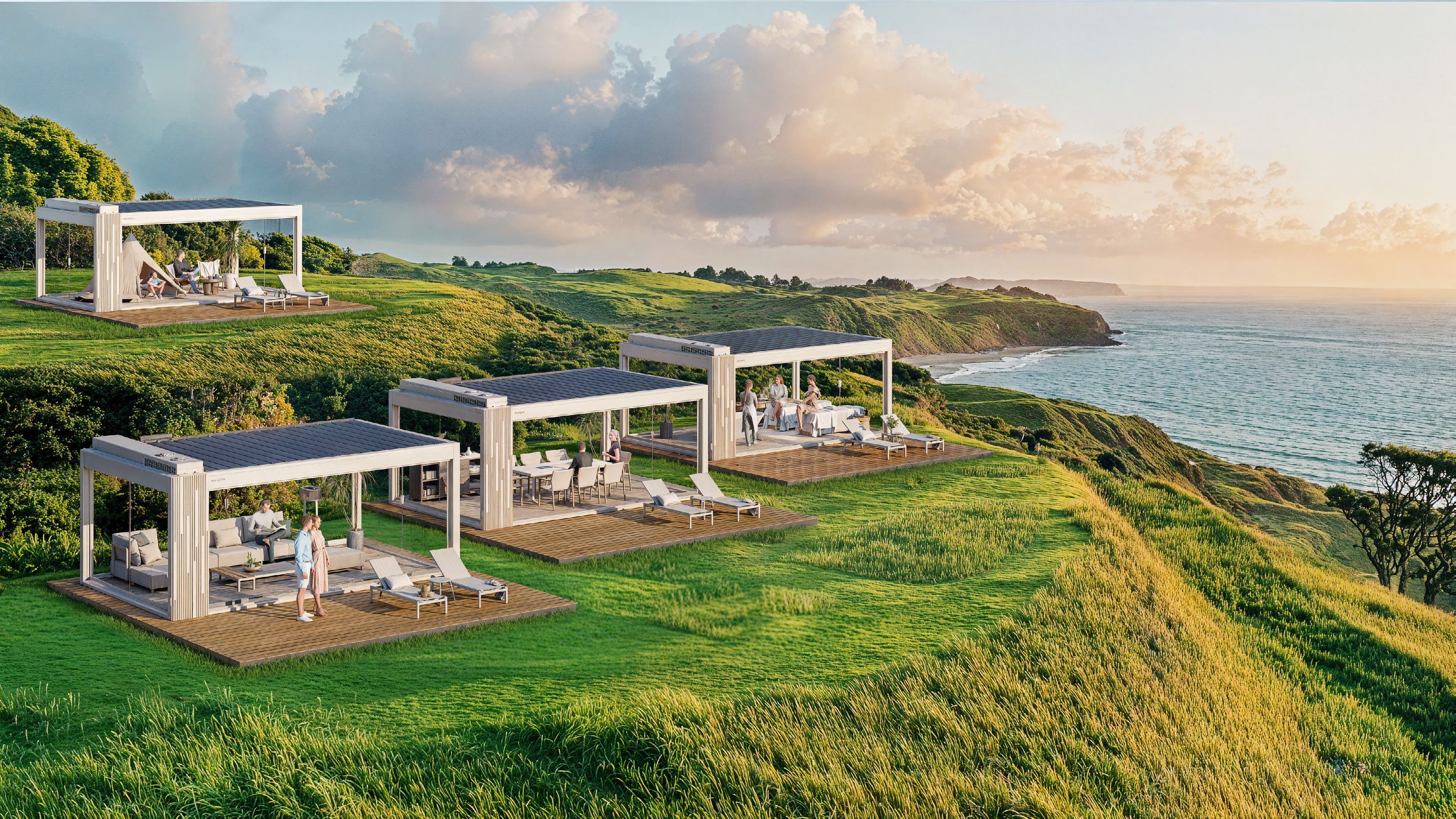
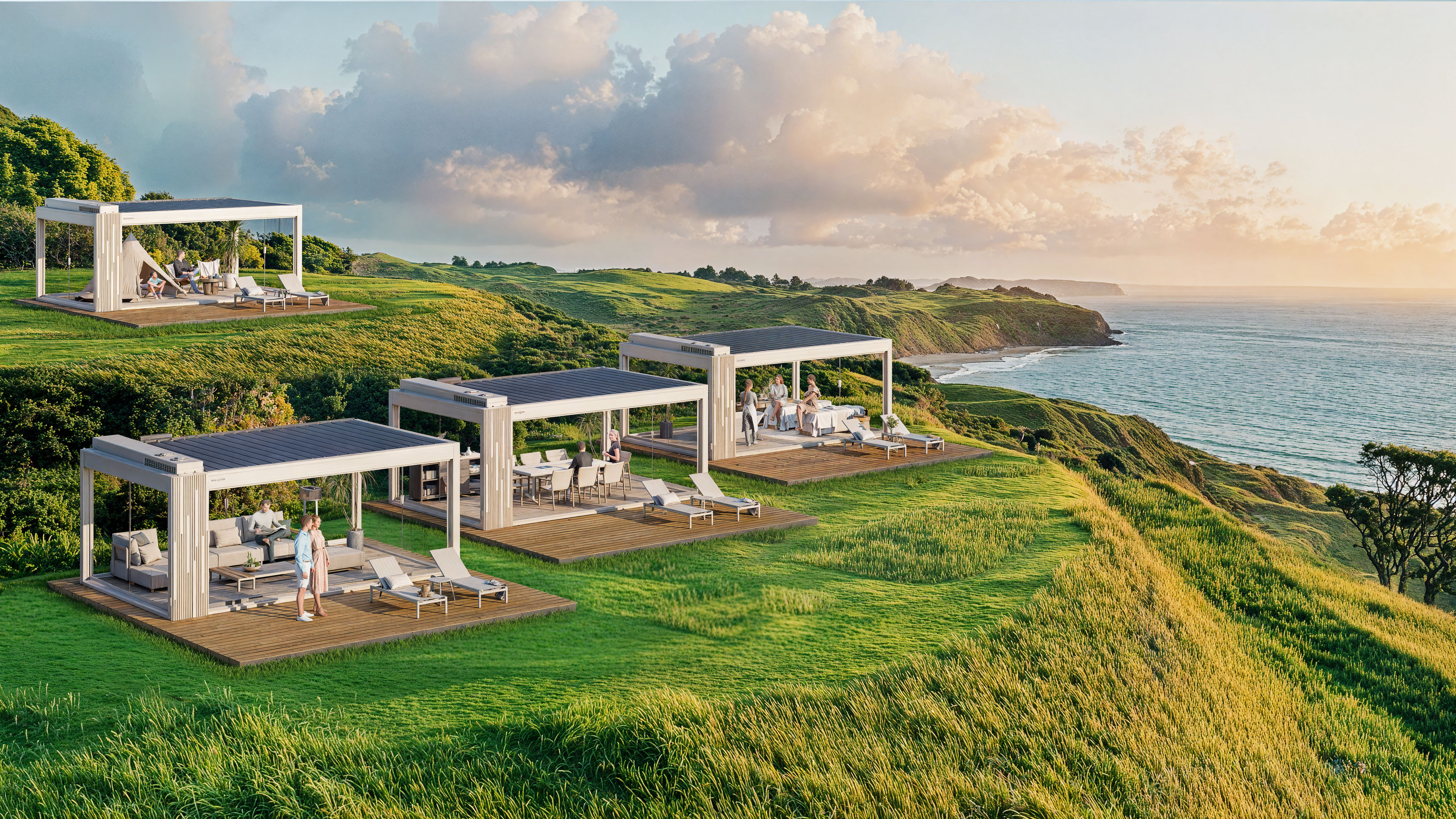
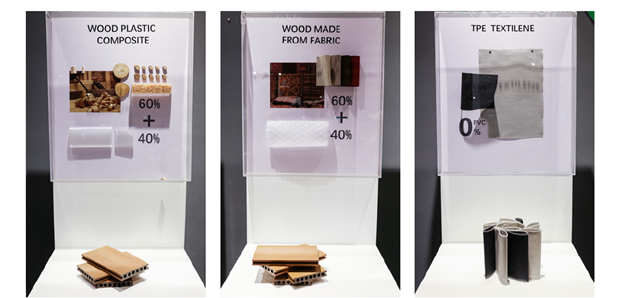
Another key aspect of design is material consideration, a practice overseen by a dedicated sub-department called the Materials Group. This team focuses on developing and ensuring the usability and applicability of eco-friendly materials to ensure a reduced environmental footprint of the company's products. For instance, the group identified viable alternatives to solid wood, such as glass fiber-reinforced concrete (GRC), ocean-recycled materials, and fiber-recycled plastic boards. These materials not only meet the durability and aesthetic requirements of their products but also significantly lower environmental impact. The team also suggested the use of transfer printing technology to mimic the appearance of wood, providing an attractive finish without the need for actual timber. This innovative approach allows Letright Industrial Corp to maintain high standards of quality and design while adhering to sustainable practices. The materials group’s efforts are integral to the company’s commitment to sustainability, showcasing their proactive approach to integrating eco-friendly solutions in their product development process. This focus on sustainable material consideration highlights Letright’s dedication to reducing environmental impact while meeting consumer demands for high-quality outdoor products. Continued innovation and quest for green outdoor products have led to the development of a signature product, the Ombra solar pergola.
THE OMBRA SMART PERGOLA: LETRIGHT’S SUSTAINABLE MASTERPIECE
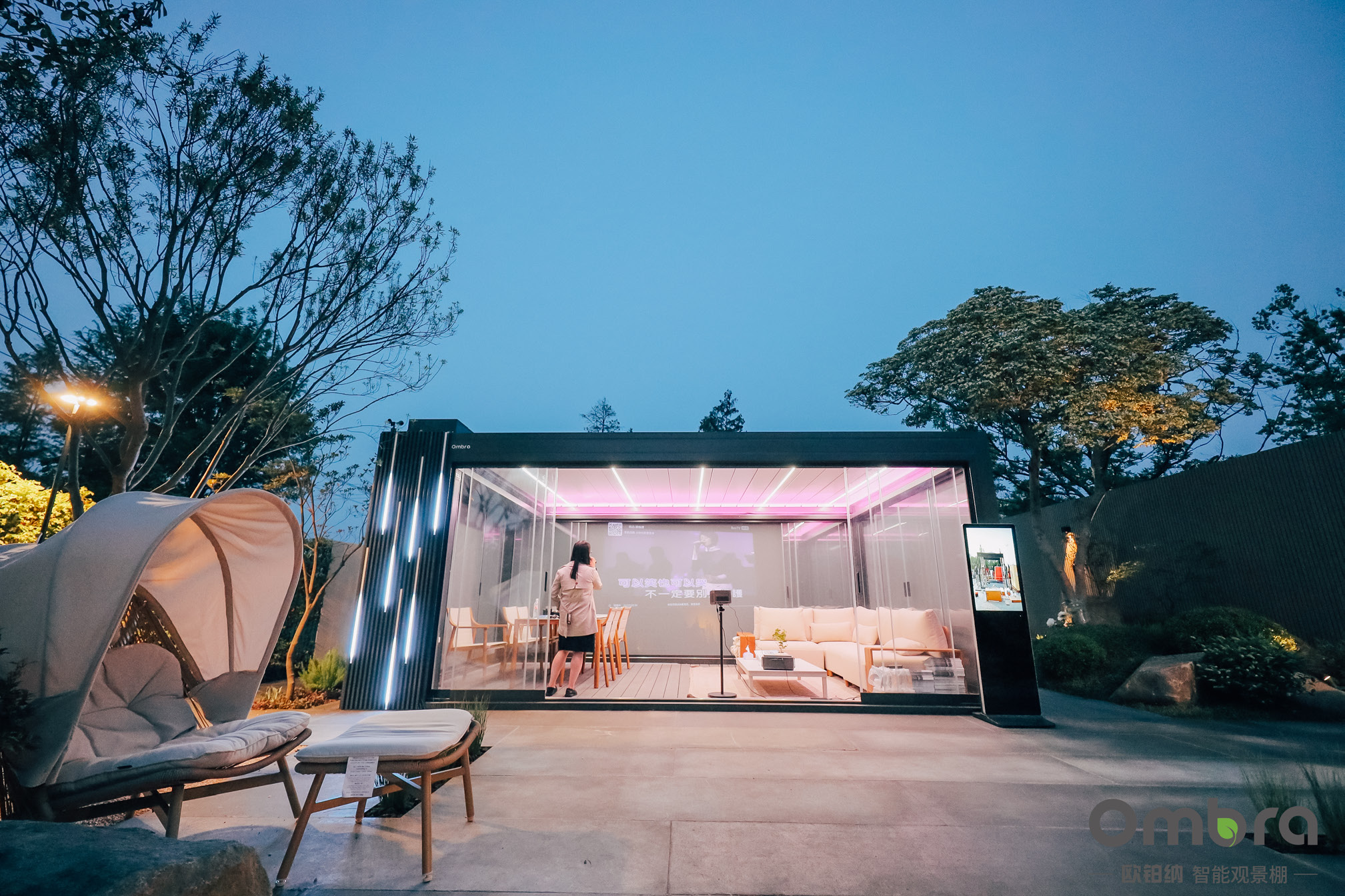
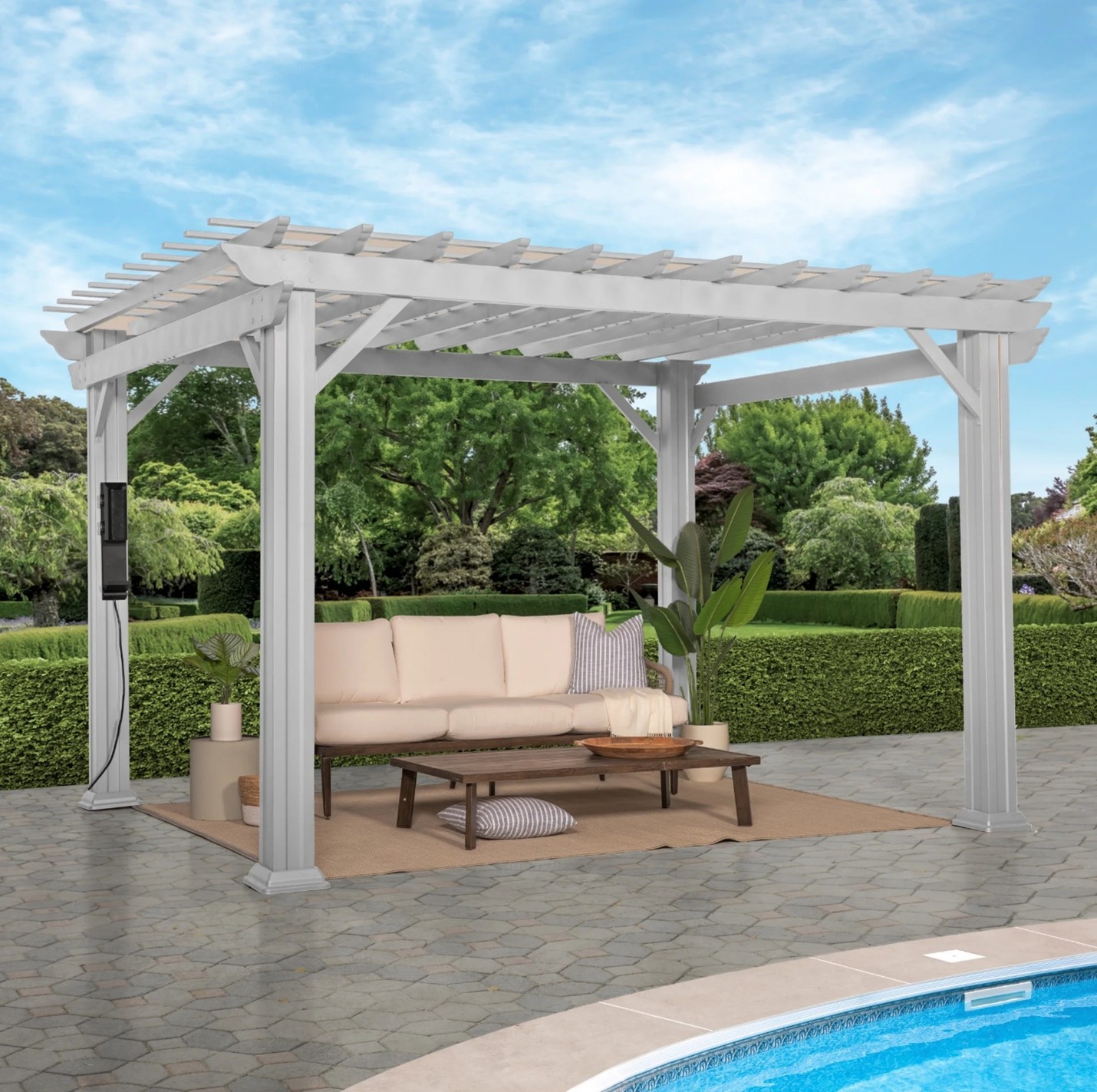
Letright understands and values the fact that outdoor living has always been associated with both cognitive and physiological benefits. According to Weir [13], exposure to nature can significantly improve mood, reduce stress, and enhance overall mental well-being. Additionally, Twohig-Bennett and Jones [14] found that time spent in nature increases heart rate variability (HRV), a key indicator of cardiovascular health, and lowers levels of the stress hormone cortisol. However, unprecedented harsh weather changes limit man's ability to enjoy the serenity of the outdoors. This explains why shelter is a basic need, as humans must shield themselves from these conditions. The company’s commitment to eco-friendly development and focus on sustainably informed designs led to the inception and development of a signature product in 2023, the Ombra Smart pergola. Its design embodies design considerations to remedy these challenges, incorporating its design philosophy to create a versatile and protective outdoor space.
HARNESSING R&D DATA FOR SUSTAINABLE INNOVATION
Letright Industrial Corp. leverages the power of data to develop evidence-based solutions by using a well-defined research and development process with a dedicated department. The key feature of the R&D process is the involvement of all departments through deliberate collaboration. Interdepartmental leading to more comprehensive, innovative, and practical designs. Letright convenes representatives from various departments including procurement, quality, design, technology, and manufacturing at the beginning of every project. Each team is encouraged to provide suggestions, ideas, and insights on how to create sustainable design products, which ensures consistency throughout the process. According to Meo;
This early-stage collaboration ensures that all key decisions are thoroughly discussed and agreed upon at each stage. From the introduction of materials to every step of the production process, we maintain transparency and cooperation to ensure the initial design concepts and goals are achieved.
Early-stage cooperation ensures thorough discussion and agreement on key decisions, maintaining the company’s vision throughout the production process. Additionally, this collaborative, research-based process helps create sustainable product designs that facilitate product differentiation therefore attracting eco-conscious consumers and providing a competitive advantage. Continuous R&D fosters innovation, therefore providing practical solutions that help in setting industry standards [15], [16]. development of signature products like the Ombra is only possible through rigorous research which fosters a clear understanding of market trends and encourages customer feedback. As such, products are developed in consideration of customer preferences and industry-wide recommendations and regulations. It also fosters efficient use of energy and material sourcing, which leads to production processes that minimize damage to the environment. Investing in research and development also allows a company to create products that are easier to recycle or repurpose, significantly reducing landfill waste.
Integrating eco elements in product design has inherent cost implications. Due to the multiple considerations and intensive research involved, developing a sustainably designed product comes with its shares of invariable costs, giving an impression of increased prices of the end product and this has been Letright’s experience. Meo reveals that:
Most eco-friendly design concepts and materials are more expensive than traditional options.
Consequently, manufacturers of eco-friendly products must take extra precautions to ensure continued profitability. For instance, Letright uses customer demand certifications to ensure continued purchase of their products. This certification provides recognition to customers who prioritize eco-friendly products, reinforcing their commitment and encouraging continued sustainable purchasing behavior. Additionally, the certifications act as a trustworthy assurance that the products they buy are genuinely eco-friendly, fostering consumer confidence in their purchasing decisions. The design director further mentioned that once certified, all related processes are strictly regulated, and these certifications and traceability cannot be faked.” Such an incentive demonstrates that the company considers potential issues and solutions right from the conception stage making it possible to acquire stakeholder support.

LETRIGHT’S VISION FOR THE FUTURE
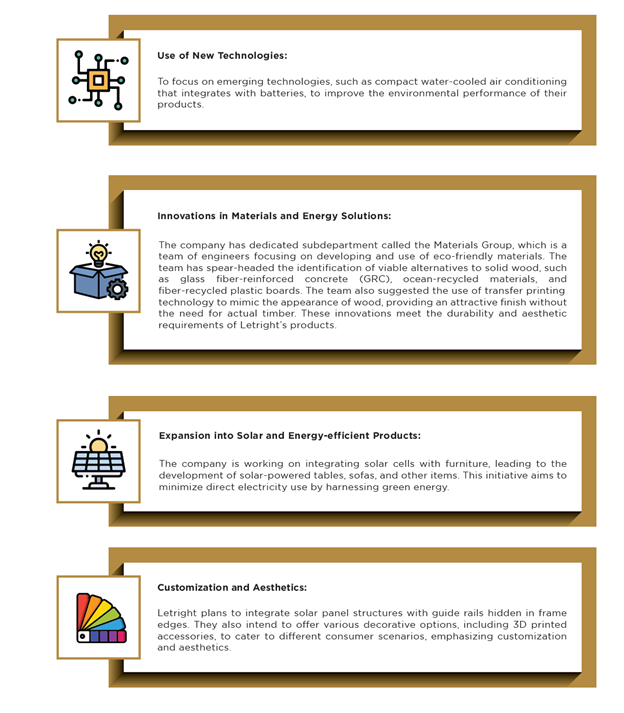
For Letright to save its position as a global brand in the outdoor industry, its R&D department has to be
innovative and continually improve. Here are some of the projects that Letight is working towards:
External / References
[1] M.Septiani, N. C. Putri, G. Verma, and N. A. Sasongko, “Eco-design practicetowards sustainable furniture: A Review,” in IOP Conference Series: Earth andEnvironmental Science, Institute of Physics, 2022. doi:10.1088/1755-1315/1108/1/012059.
[2] G.Başar, “Sustainability in Urban Furniture Design; The Use of Renewable EnergySources,” Journal of Current Research onEngineering, doi: 10.26579/jocrest.72.
[3] EuropeanCommission, “Circular Economy Plan For a cleaner and more competitive Europe,”2020.
[4] M.E. Muhammad Suandi, M. H. Amlus, A. R. Hemdi, S. Z. Abd Rahim, M. F. Ghazali,and N. L. Rahim, “A Review on Sustainability Characteristics Development forWooden Furniture Design,” Jul. 01, 2022, MDPI. doi: 10.3390/su14148748.
[5] K.Vink, “Sustainable life cycle design aspects: how aware are materialscientists?,” SN Appl Sci, vol. 2, no. 8, Aug. 2020, doi:10.1007/s42452-020-3151-z.
[6] WeiLun Lee, S. Ying Chung, Y. Shee Tan, S. Mun Ho Koh, W. Feng Lu, and J. SzeChoong Low, “Enhancing the environmental sustainability of product throughecodesign: a systematic review,” Journal of Engineering Design, vol. 34, no.10, pp. 814–843, 2023, doi: 10.1080/09544828.2023.2261094.
[7] D.Sarpong, D. Boakye, G. Ofosu, and D. Botchie, “The three pointers of researchand development (R&D) for growth-boosting sustainable innovation system,” Technovation,vol. 122, Apr. 2023, doi: 10.1016/j.technovation.2022.102581.
[8] LetrightIndustrial Corp., “Company Profile,” 2021. [Online]. Available:https://www.letright.com/en_us/companyprofile.jhtml
[9] Statista,“Market Insights Consumer Furniture Outdoor Furniture-Worldwide,” 2024.[Online]. Available: https://www.statista.com/outlook/cmo/furniture/outdoor-furniture/worldwide#:~:text=In
[10] L. Linkosalmiet al., “Main factors influencing greenhouse gas emissions of wood-basedfurniture industry in Finland,” J Clean Prod, vol. 113, pp. 596–605, Feb. 2016,doi: 10.1016/j.jclepro.2015.11.091.
[11] W.Chen and Y. Wu, “China’s New Environmental Protection Law and Green Innovation:Evidence from Prefecture-Level Cities,” Complexity, vol. 2021, 2021, doi:10.1155/2021/5566357.
[12] M.Adamczyk, “Central European Review of Economics and Management: The importanceof cultural differences in international business,” vol. 1, no. 2, pp. 151–170, 2017, [Online]. Available: www.cerem-review.euwww.ojs.wsb.wroclaw
[13] K.Weir, “Nurtured by nature,” Monitor on Psychology, vol. 52, no. 3, pp. 50–61,Oct. 2020, Accessed: Aug. 19, 2024. [Online]. Available: https://www.apa.org/monitor/2020/04/nurtured-nature
[14] C.Twohig-Bennett and A. Jones, “The health benefits of the great outdoors: Asystematic review and meta-analysis of greenspace exposure and healthoutcomes,” Environ Res, vol. 166, pp. 628–637, Oct. 2018, doi:10.1016/j.envres.2018.06.030.
[15] F.A. P. Duarte, M. J. Madeira, S. M. Fonseca, D. C. Moura, and A. T. B. Guia,“Innovation activities and R&D investments as determinants of ongoing orabandoned activities,” International Journal of Innovation Science, vol. no. 3,pp. 507–529, May 2023, doi: 10.1108/IJIS-07-2021-0136.
[16] C.Rosário, C. Varum, and A. Botelho, “Unlocking the Code to ContinuousInnovation: A Study of Key Determinants for Serial Innovators,” Adm Sci, vol.14, no. 3, Mar. 2024, doi: 10.3390/admsci14030045.