Doing Things Right, Doing the Right Things: The Scramble for the Soul of an Organisation
Doing the right thing in business means upholding a clear ethical stance, even at the cost of sacrifice, resistance, and uncertainty.



Abstract
This paper interrogates the meaning of “doing the right thing” in corporate leadership, arguing that ethical action is neither universal nor cost-free but contextually negotiated among competing moral frameworks and stakeholder expectations. Drawing from philosophical traditions including Kantian ethics, utilitarianism, virtue ethics, care ethics, Ubuntu, and contemporary sustainability discourse, the paper highlights how definitions of “right” differ across governments, investors, workers, consumers, and environmental advocates. Using Letright Industrial Corp., Ltd. as an illustrative case, it examines how founder and CEO Ren Li operationalised the philosophy of “Do things right, do the right things” through long-term environmental commitment, strategic transformation from OEM to ODM, sustained R&D investment, and the development of differentiated sustainable products such as the Ombra Smart Pergola. The analysis demonstrates that values-led leadership entails significant costs—including internal resistance, customer attrition, regulatory complexity, and geopolitical exposure—but can generate resilience, differentiation, and compounding capability over time. Ultimately, the paper argues that organisational excellence does not lie in universal moral consensus, but in defining, owning, and consistently executing a coherent version of “right” aligned with long-term integrity and responsibility.
Copyright
Doing things Right, Doing the Right things: The Scramble for the Soul of an Organisation
Published by the ACES Institute
Published on 4th March 2026
Serial Number: AI260114-TA107
Kuala Lumpur, Office Block #1-2, 48 Jalan Tun Mohd Fuad, TTDI, 60000 Malaysia
Copyright © 2026 ACES Institute. All rights reserved
Email: connect@acesinstitute.org
Website: www.acesinstitute.org
Key Findings
WHAT DOES “DOING THE RIGHT THING” MEAN?
Imagine a CEO at the centre of a health crisis, where demand for safety equipment far exceeds supply. Distributing PPE equally may satisfy principles of fairness, yet risks preventable deaths among critical workers. Prioritising those at greatest risk can save more lives, but demands justification to those left waiting. Delaying action in the name of consultation may appear responsible, yet carries the cost of lives lost. Every decision taken will protect some people while leaving others exposed and whatever course is chosen will later be interpreted either as principled leadership or as grave negligence. Many organisations believe they are doing the right thing when in fact they are only doing things right. “Doing the right thing” is often cited in conversations about morality, ethics, and responsibility [1], [2], [3], yet its meaning is far from uniform. In practice, it becomes a context-sensitive negotiation among competing ethical frameworks. From a Kantian perspective, the right course for the dilemma demands that the CEO exercises equal respect for all and honesty in communication [4]. A utilitarian approach, following Mill, would prioritise actions that save the most lives [5]. Aristotle’s virtue ethics calls for prudent and courageous judgment [6], while care ethics emphasizes protecting the most vulnerable [7]. African Ubuntu adds a communal dimension, urging consultation and solidarity [8].Contemporary interpretations may extend to social corporate responsibility and transparent governance [9]. In such cases, what constitutes “right” depends largely on perspective, values, and stakeholder priorities. For environmental advocates, doing the right thing may involve reducing carbon emissions, conserving resources, or transitioning to renewable energy systems. Governments may define it in terms of regulatory compliance, taxation, and adherence to national and international environmental frameworks. Workers and unions often associate it with fair wages, dignified working conditions, and long-term job security, while investors may emphasis governance standards, risk management, and sustained returns. Consumers frequently weigh ethical considerations against affordability, convenience, or even aesthetic appeal. These approaches to what is right do not always align, and in some cases may directly conflict or raise serious dilemmas. When organisations attempt to satisfy varied expectations simultaneously, they risk strategic incoherence and diluted impact. None of these perspectives are wrong, yet none can be followed without cost. In practice, what is right depends on whose values are prioritised, whose risks are accepted, and who bear the consequences when ideals collide. Letright Industrial Corp., Ltd., a manufacturer of premium outdoor products, has operated for more than two decades, establishing itself as an authority in the outdoor industry. Deeper investigations reveal that earlier transformation from Hangzhou China Arts Economic & Trading Corp., Ltd. & Hangzhou China Arts Industrial Corp., Ltd. to Letright Industrial Corp., Ltd. was far more than a cosmetic rebrand as it signalled a profound shift in vision and values.
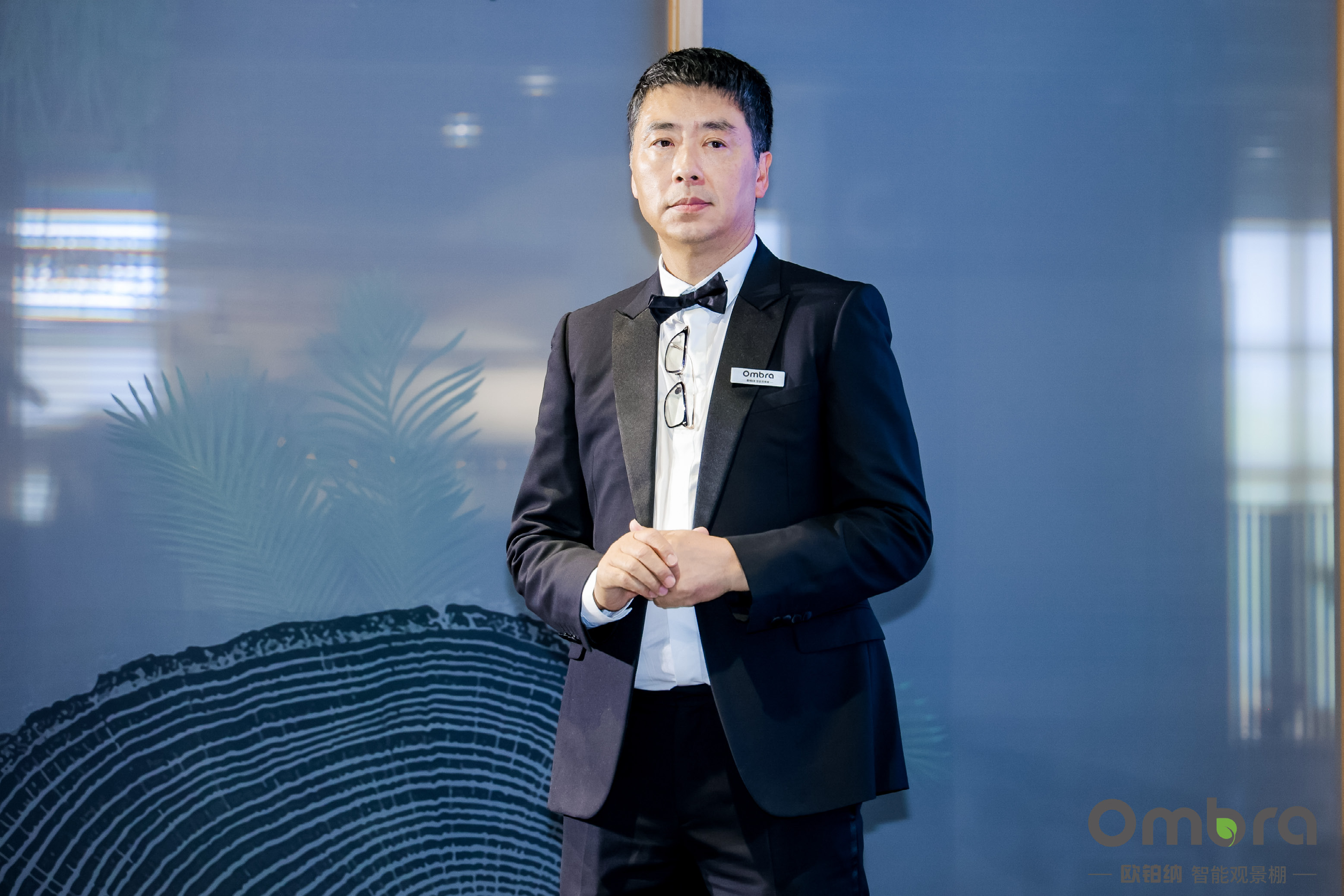
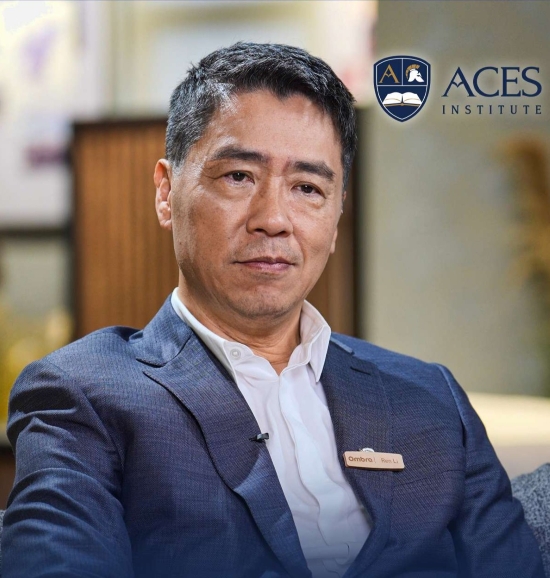
The new name, meaning“Do things right, do the right things,” became the cornerstone of the company’s identity and a guiding philosophy for its leadership,especially founder and CEO Ren Li.This principle has shaped strategic decisions,corporate culture, and global positioning, influencing how the organisation defines success and responsibility.
This piece seeks tocontextually bring that philosophy to life, exploring what it means in practice and how it continues to steer Letright’s journey. It seeks answers tothese profound questions: What arethese “right things”? What is the right way? Who decides what is right, and what happens when doing the right thing is not easy?
Letright’s identity does not claim a universally “correct” definition of what is right, but it reflects a conscious decision to define and act upon a set of guiding principles rooted in long-term environmental responsibility and product integrity. This stance is consistent with the ethical principle of non summarised as “do no harm,” which holds that even when ideal moral outcomes are unattainable, actors retain a fundamental obligation to avoid actions that cause foreseeable harm [10]. Applied to corporate decision-making, this principle suggests that while companies may not always be able to meet every leadership ideal, they remain responsible for not pursuing practices that are clearly environmentally or socially damaging. For Letright, this ethical threshold has shaped how leadership evaluates trade-offs between market demand, cost pressures, and environmental impact. In the early 2000s, even before the enactment of the Kyoto Protocol and without local and international external pressure, Ren began questioning the ecological consequences of Letright’s operations embedded in conventional outdoor manufacturing, which relied intensively on resource-intensive materials and short product life cycles [11]. Letright’s interpretation does not dismiss other stakeholder expectations but acknowledges that pursuing what is believed to be a worthy course may entail short-term sacrifices in exchange for longer-term resilience and value creation. Studies show that organisations adopting proactive sustainability strategies frequently face higher upfront costs and stakeholder scepticism [12], [13]. In this sense, doing the right things is neither morally convenient nor strategically neutral; it is a deliberate choice that requires leadership willing to absorb resistance and uncertainty.
THE COST OF DOING THE RIGHT THING
“The resistance came from every corner—from your customer, from your management, and from your factory workers.”
Committing to what’s right, often presented as a moral aspiration, yet in practice, it introduces a series of tangible and intangible costs [14]. For organisations attempting values-led transformation, ethical clarity rarely simplifies decision-making but often exposes them to resistance, uncertainty, and trade-offs that test both financial endurance and organisational cohesion. In Letright’s experience, making decisions from the “right” mindset has introduced the company to some of the most testing moments of its existence.
The Philosophical Isolation
The real test of the essence of Letright’s philosophy began after Ren Li decided to abandon wood in favour of recyclable materials. At the time, in the2000s, wood dominated outdoor furniture markets, environmental activism was only just picking up, and China’s economy was booming after joining the WTO. There were no strict legal frameworks compelling change, and industry peers saw little reason to deviate from profitable norms. Ren’s choice was not driven by external pressure but by personal conviction after witnessing firsthand the ecological damage caused by his supplier’s logging practices. He resolved to act on what he believed was right for the environment [11]. The consequences were immediate and severe. Internally, resistance erupted from every level: factory workers baulked at unfamiliar processes, senior managers warned of financial ruin, and some directors resigned rather than endorse what they viewed as a reckless gamble. He recalls that,
Externally, customers clung to wood for its aesthetic appeal and affordability, and competitors stayed silent, leaving Ren isolated in both his company and the market. Revenue plunged as orders driedup, and doubts crept in-how do you claim ethical certainty when every signal around you screams “wrong”?
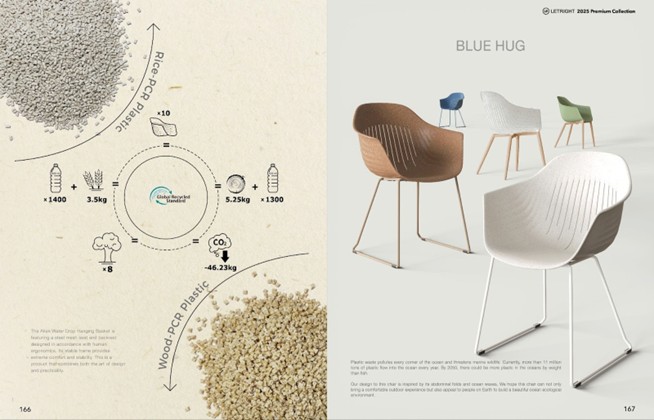
From the customer’s perspective, staying with wood seemed “right”; its aesthetic appeal, long-standing traditional use, and the absence of a widely accepted alternative reinforced that view. This collided with Ren’s conviction about what was right for the environment, and, for a time, he appeared to be losing the contest: orders fell and preference for timber held firm. Yet, after witnessing the effects of his actions, Ren was unwilling to continue as before. The question, however, was whether personal conviction could shift a long held narrative that “the customer is always right.” For Letright, rejecting customer expectations meant accepting one's values and standing by a decision grounded in environmental responsibility despite immediate commercial costs. This clash exposes a stubborn paradox: while consumers often voice support for sustainability, their wallets tell a different story. Previous studies have shown that price and convenience trump green ideals, since cost sensitivity is acute in most markets [15], [16]. Ren puts it bluntly:
Human nature is to buy the easy thing, the cheap “thing.”
For manufacturers,that reality creates a brutal choice of either absorbing higher costs orcompromising on sustainability Ren chose the harder path, despite the cost.
Lack of Unified Legal or Policy Frameworks
Over time, Letright Industrial Corp., Ltd. Has remained committed to its choice of sustainable materials and production processes while continuing to deliver the aesthetic appeal customers expect. Today, a stronger global call for environmental stewardship in the era of ESG finds the organisation well ahead, having been on this journey for several years Yet challenges persist. Letright provides a comprehensive portfolio of outdoor leisure furniture and lifestyle products, targeting the global mid-to-high-end market with a strong focus on developed countries (primarily North America, Western Europe, Australia and New Zealand etc), serving both individual consumers (B2C) and commercial clients (B2B) However, the absence of unified sustainability standards and regulatory frameworks across these regions complicates its efforts to present a coherent and consistent approach to responsible practices Global standards for carbon disclosure, material sourcing, and environmental reporting are expanding, yet remain uneven across regions and industries [17] For multinational firms, this variability introduces operational complexity, requiring navigation of differing legal frameworks, certification schemes, and reporting obligations While these regulations are widely acknowledged as essential for environmental protection, compliance often introduces operational complexities and can strain logistical and operational efficiency, even though such investments may later be offset by reputational gains, improved stakeholder trust, and expanded market access [18]. Rather than viewing these pressures as impediments, Letright interprets them as signals of an inevitable global shift that will increasingly reward early alignment and penalise delayed adaptation
The Shift from OEM to ODM
Another high cost stemmed from Letright's early reliance on OEM (Original Equipment Manufacturer) production. In this phase, client specifications regularly overrode the company's emerging production philosophy, with buyers insisting on particular materials and outputs that were commercially acceptable but misaligned with Letright's values. As Ren Li put it,
"We don't know what we are producing"
Because the firm was largely replicating client samples without shaping design intent, brand identity, or quality perception around end user needs and market positioning. Research comparing OEM and ODM (Original Design Manufacturer) strategies corroborates these weaknesses: OEM dependent firms underinvest in design capabilities, struggle to differentiate, and perform poorly under demand volatility [19], [20]. The pivot toward original design (ODM) therefore demanded heavy investment in research, innovation, and internal capability development, raising overheads and slowing early returns, and, at times, putting Letright on the brink of losing price sensitive customers resistant to the change Yet these costs were the necessary price of "doing the right thing" the transition to ODM was indispensable to align product outcomes with Letright’s values and long-term positioning.
Constrained by its own sustainabilitycriteria for materials, suppliers, processes, and outputs, and lacking peerbenchmarks, Letright had to innovate its way forward That meant investing inR&D without the safety net of proven demand, accepting long developmentcycles, and building new manufacturing capabilities from scratch. As a firstmover, it also faced classic market entry burdens persuading distributors tocarry unfamiliar products, creating usage standards where none existed, andeducating customers on performance and durability claims that could not lean ondecades of wood-based norms [21]. Even with disciplined governance, new productdevelopment carries material downside risk large consumer goods datasets showroughly 25-40% of launches cease or stall with in one to two years, andhistorical reviews place typical failure rates closer to 30-40% rather than theoften quoted 80-90% [22], [23] Internally, every design choice carriedcompounding risk, new inputs, new tooling, and new quality controls, sosetbacks at any stage could stall the whole pipeline Externally, higher unitcosts and cautious channel partners slowed adoption, forcing Let right tobalance technical ambition with phased launches, pilot markets, and iterativeimprovements simply to keep momentum. The organisation's sustainability stancedid not Just change what it made; it rewired how it invented, introduced, andscaled products, raising execution thresholds across R&D, operations, andgo to market all at once.

Navigating Global Geopolitics
Geopolitical volatility, particularly theChina-United States trade conflict, introduced uncertainty that disruptedpricing, supply chains, and long-term planning This challenge is not unique toLetright; it was a global issue then and remains so today, especially fororganisations seeking to attract and serve international markets. Tariffs onChinese exports have risen sharply, in some cases exceeding 50%, dramaticallyaltering cost structures and competitive dynamics [24], [25] Ren characterisesthe impact as "a tsunami," reflecting how rapidly trade policy shiftscan undermine carefully constructed global strategies These pressures wereintensified by fierce competition in international e-commerce markets, whereaggressive pricing and short-term tactics often disadvantage firms pursuingdifferentiated, sustainability-driven offerings . Taken together, theseexperiences reveal a core truth about values led leadership doing the rightthing does not simplify the world; it changes the way leaders engage with itscomplexity Ethical commitment will not insulate an organisation from resistance,volatility, or short-term setbacks, but it instead calls on leaders to facethose pressures as the price of principle. Letright's journey shows that moralclarity rarely brings instant endorsement. More often, conviction comes first,and recognition follows, requiring patience, resilience, and a steady tolerancefor uncertainty
WHY KEEP GO ING? PURPOSE, LEADERSHIP, AND CONVICTION
Given the sustained resistance, uncertainty, and financial risk that accompany a commitment to principle, the question naturally arises: what drives a leader to persist? For most, it would be easier to compromise or retreat in the face of adversity, prolonged exposure to losses, scepticism, and volatility However, guided by a deeply embedded sense of purpose and less by market logic, Ren Li continued to guide the company in the directions that reflected his beliefs of 'what is right'. This purpose functions not as a motivational slogan, but as an organising principle that shapes how leadership interprets setbacks, trade-offs, and long-term goals.
For Ren Li, this resolve is rooted in personal history and lived experience rather than abstract sustainability theory Earlier reflections on his upbringing and formative exposure to environmental degradation influenced how he came to view business responsibility [11] Rather than seeing the firm solely as a vehicle for profit maximisation, Ren understood it as a mechanism through which personal values could be expressed at scale. This framing transformed sustainability from an external demand into an internal obligation, one that persisted even when it conflicted with prevailing market incentives or stakeholder expectations This sense of purpose helps explain why Letright continued investing in sustainability-led innovation despite repeated challenges. Purpose, in this context, is not synonymous with stubbornness. Studies on purpose-driven leadership suggest that organisations anchored in clear ethical missions are better equipped to navigate uncertainty, as purpose provides coherence when external signals are ambiguous or contradictory [26]
a) The 4Cs
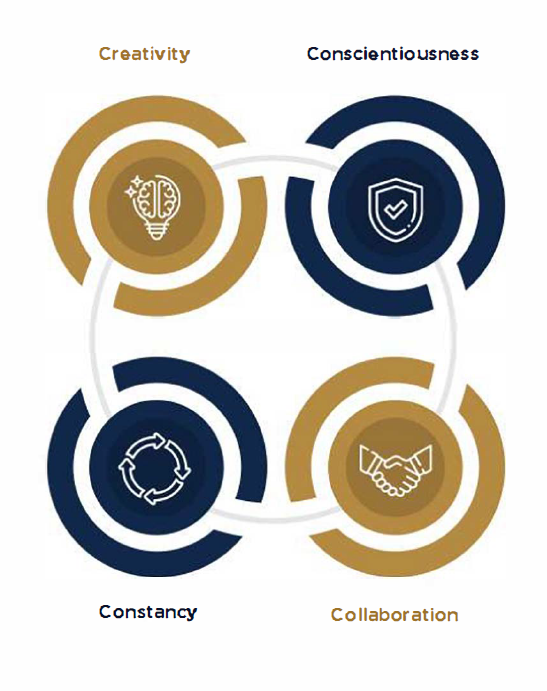
Letright's orientation is institutionalised through its 4C framework Creativity, Conscientiousness, Constancy, and Collaboration. Among these, conscientiousness and creativity are particularly central to sustaining the company's "doing the right things" philosophy Conscientiousness reflects a commitment to doing work thoroughly and responsibly, even when shortcuts might offer faster or cheaper outcomes. It reinforces the idea that quality, ethics, and responsibility are inseparable from technical excellence. Creativity, meanwhile, provides the means through which these values are translated into differentiated products Rather than treating sustainability as a constraint, creativity enables Letright to reimagine outdoor living structures in ways that integrate performance, aesthetics, and environmental function, as later exemplified by Ombra, Letright's luxury smart pergola.
b) Right Team
Purpose also shapes how Letright approaches people and capability development According to Ren Li,
It starts from humanity... Once you have the right people and the right value, you will have everything."
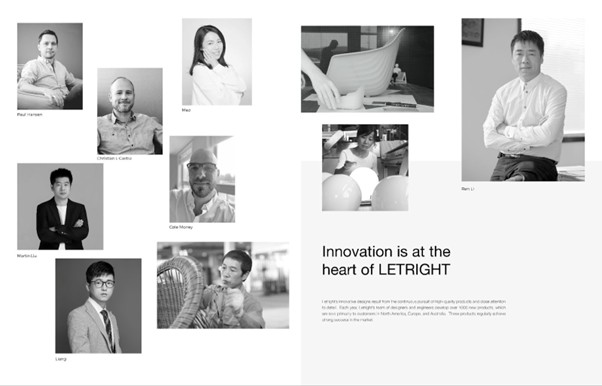
Values-led persistence requires a workforce that not only understands the technical aspects of innovation but also shares the underlying rationale for why those innovations matter. Consequently, Letright has invested heavily in research and development, assembling teams tasked with continuous learning, market analysis, and iterative design This emphasis on internal capability-building reflects recognition that sustainable innovation 1s rarely linear; it demands experimentation, failure, and refinement. Over time, these investments have translated into a substantial intellectual property portfolio, reinforcing the firm's commitment to originality and long-term differentiation.
c) Feedback for Continuous Improvement and Partnerships
Importantly, persistence does not implyresistance to feedback. While purpose provides direction, adaptabilitydetermines viability Ren acknowledges that the initial years following Ombra'slaunch were marked by customer-centric challenges that tested the company'sassumptions Rather than interpreting criticism as a reason to retreat, Letrighttreated it as evidence that the product's intended purpose had not yet beenfully realised. Purpose further informs how Let right selects and sustainspartnerships Recognising that long journeys require alignment rather thanaccumulation, the company deliberately collaborates with suppliers,distributors, and industry partners who share its core values. This selectiveapproach reduces friction across the supply chain and reinforces coherencebetween stated principles and operational practice It also reflects anunderstanding that sustainability-led innovation is systemic rather thanisolated, extending beyond individual products to encompass relationships andgovernance structures.
Letright's persistence illustrates that thequestion "why keep going" cannot be answered solely through metricsor market forecasts, but through conviction, the belief that certain choicesare worth defending even when they complicate growth or delay returns. Forleaders like Ren Li, purpose offers a form of internal consistency that allowsthem to sleep despite unresolved challenges, while compromise against deeplyheld values would impose a higher psychological and organisational cost.
EXECUTING THE MISSION: FROM PRINCIPLE TO PRACTICE
While purpose explains why Letright persisted, it is the discipline of execution that explains how conviction translated into competitive reality. Doing the right things without doing them well risks producing ideals without impact. For Letright, "doing things right" has been about the systematic alignment of strategy, design capability, technological investment, and operational rigour to ensure that their beliefs are not merely stated, but engineered into products and processes. Letright's pivotal move was an early, voluntary shift from wood to other recyclable materials, treating sustainability as an engineered attribute. In a mature category, this functioned as green product differentiation, winning on core attributes customers value (durability, maintenance, lifecycle performance) rather than slogans [27], [28] As Ren recalls,
"I started voluntarily in 2001 to use aluminium to replace wood ... it was difficult at every step."
When environmental performance is built into material choice, repairability, and long-term use, it strengthens brand distinctiveness and competitive advantage [29], [30]. For Letright, the material shift was both an ethical stance and a competitive signal-redesigning how pergolas are conceived and built, well before sustainability became industry standard. Observational evidence suggests that the pergola segment has become saturated with visually indistinguishable designs, aluminium frames, louvred roofs, and integrated accessories forming a near-universal template. Studies underscore the implications of such uniformity, noting that homogeneity can polarise consumer experience and erode brand distinctiveness, often producing mixed or negative effects on market performance [31], [32], [33], [34]. The tension between sustainability-driven convergence and the need for differentiation frames a fundamental question: How can brands innovate without succumbing to sameness? Letright's responded to this by ensuring material selection encompasses design philosophy and user-centred innovation. This approach is engineered by the R&D department, consisting of a cross-functional team that reports to the CEO directly but also has the autonomy to bring the company values to life through their designs.

Critically, Let right Industrial Corp., Ltd operationalises this principle through the systematic collection and analysis of customer data within its core markets. An approach that reflects an awareness that a disconnect between design intent and user experience can undermine even ethically grounded products. In other words, sustainability without usability risks becomes performative rather than transformative. The Ombra solar smart pergola exemplifies this synthesis of values and technical ingenuity and integrates photovoltaic technology directly into its louvred roof system. This architectural decision enables the pergola to generate renewable energy while regulating light, heat, and ventilation, a convergence validated by academic studies on adjustable photovoltaic louvre systems, which demonstrate their dual capacity to produce electricity and reduce cooling loads [35]. However, the pursuit of "doing things right" is neither linear nor insulated from friction Letright's evolution from OEM dependency to ODM required substantial investment in internal capabilities, culminating in hundreds of R&D personnel and an intellectual property portfolio exceeding 1,000 patents, with over 137+ specifically related to Ombra. This scale of commitment shows that sustainability-led innovation is iterative, requiring continuous refinement, testing, and learning rather than a singular breakthrough. The early years following Ombra's launch (in the year 2023) illustrate this reality. Customer-centric challenges emerged, testing the robustness of the concept Rather than retreating, Letright treated these issues as feedback loops, leveraging them to enhance functionality, usability, and performance.
OUTCOMES: DIFFERENTIATION, RESILIENCE, AND COMP OUNDING CAPABILITY
By embedding environmental performance into core attributes, material choice, energy generation, thermal comfort, installation quality, and ease of service, Letright competes on function and experience, not on claims. Even as aluminium frames and louvred roofs become common, architectural integration, user centred controls, and consistent installation standards preserve distinctiveness. This has kept the brand out of commodity traps where look alike offerings erode value. Early phases demanded patience through revenue dips and market scepticism, but methodical validation, installer readiness, and responsive service created trust, improved conversion, and raised repeat business over time. Clear operating standards, warranties tied to service protocols, and a structured escalation path for field issues help distributors and customers manage risk, reducing friction in new geographies and channel relationships. Years of investment in design talent, testing assets, and intellectual property now shorten development cycles, lower unit costs at scale, and support consistent quality across markets. When external shocks hit, policy shifts, trade frictions, or supply chain volatility, the same discipline (dual sourcing, configurable platforms, and defined quality gates) helps the firm absorb disruption without abandoning principles. Taken together, these results show that "doing things right" is not perfectionism; it is coherence, purpose, strategy, and execution reinforcing one another to produce offerings that are both responsible and competitive.
OWNING YOUR VERSION 0F "RIGHT"
Doing the right things does not imply moral certainty or universal agreement; rather, it demands clarity of conviction, a willingness to absorb cost, and consistency in execution, particularly when ethical commitments collide with prevailing market logic. This paper has shown that Ren Li's philosophy of doing the right things and doing things right operates not as rhetoric, but as a practical decision making framework embedded within Letright's industrial practice. Strategic choices-such as abandoning conventional materials, moving beyond OEM dependence toward original design ownership, and sustaining long term investment 1n research and development, demonstrate how values can be translated into operational decisions. These choices incurred tangible costs, including customer attrition, internal resistance, regulatory complexity, and heightened exposure to geopolitical risk, yet they simultaneously created the conditions for differentiation, resilience, and long term relevance Letright's journey underscores that "right" in business is inherently plural governments, consumers, investors, workers, and environmental advocates each define responsibility through distinct lenses. Rather than attempting to satisfy all expectations at once, Letright set and consistently defended its own ethical threshold, prioritising coherence between stated values and actual practice over moral consensus.
Letright defines "right" by refusing short term gain at the expense of long term integrity. It means designing rather than imitating, investing rather than extracting, and accepting friction where values demand it. Letright will not compromise on material responsibility, on ownership of design and innovation, or on decisions that undermine environmental accountability, even when doing so limits market access, slows growth, or invites uncertainty. In this sense, "right" is not measured by consensus or convenience, but by alignment between intent, action, and consequence and by the courage to sustain that alignment over time. Ultimately, there are many "rights" out there, but one has to think carefully about their kind of right Own it, defend it. Work daily to keep 1t alive, and for an organisation like Letright, communicate it-that's when others/workers will embrace it. And when all is said and done, what 1s right can be personified.
External / References
REFERENCES LIST
[1] R. L. Garza Mitchell, “Doing the Right Thing: Ethical Leadership and Decision Making,” New Dir. Community Coll., vol. 2012, no. 159, pp. 63–72, Sep. 2012, doi: 10.1002/cc.20027.
[2] N. M. Pless, A. Sengupta, M. A. Wheeler, and T. Maak, “Responsible Leadership and the Reflective CEO: Resolving Stakeholder Conflict by Imagining What Could be done,” J. Bus. Ethics, vol. 180, no. 1, pp. 313–337, Sep. 2022, doi: 10.1007/s10551-021-04865-6.
[3] N. M. Pless, T. Maak, and D. A. Waldman, “Different Approaches Toward Doing the Right Thing: Mapping the Responsibility Orientations of Leaders,” Acad. Manag. Perspect., vol. 26, no. 4, pp. 51–65, Nov. 2012, doi: 10.5465/amp.2012.0028.
[4] R. Johnston and A. Cureton, “Kant’s Moral philosophy.” Stanford Encyclopedia of Philosophy. [Online]. Available: https://plato.stanford.edu/entries/kant-moral/
[5] J. S. Mill, Ed., Utilitarianism. Waiheke Island: Floating Press, 2009.
[6] R. Kraut, “Aristotle’s Ethics (Stanford Encyclopedia of Philosophy),” Stanf. Encycl. Philos., 2022, [Online]. Available: https://plato.stanford.edu/entries/aristotle-ethics/
[7] M. Sander-Staudt, “Care Ethics,” in Internet Encyclopedia of Philosophy, Routledge, 2019. [Online]. Available: https://syllabus.pirate.care/library/Maureen%20Sander-Staudt/Care%20Ethics%20 (653)/Care%20Ethics%20-%20Maureen%20Sander-Staudt.pdf
[8] T. Metz, “Ubuntu as a moral theory and human rights in South Africa,” Afr. Hum. Rights Law J., vol. 11, no. 2, pp. 532–559, 2011.
[9] A. B. Carroll and J. A. Brown, “Corporate Social Responsibility: A Review of Current Concepts, Research, and Issues,” in Corporate Social Responsibility, Emerald Publishing Limited, 2018, pp. 39–69. doi: 10.1108/S2514-175920180000002002.
[10] T. Beauchamp and J. Childress, “Principles of Biomedical Ethics : Marking Its Fortieth Anniversary,” Am. J. Bioeth., vol. 19, no. 11, pp. 9–12, Nov. 2019, doi: 10.1080/15265161.2019.1665402.
[11] B. Timothy, F. Ager, Dr. F. Tjiptono, and Dr. C. Yit Sean, “REN LI’S VISION: Transforming Outdoor Living with Elegance and Environmental Stewardship,” ACES Insistute, Industry research, case study, 2024. [Online]. Available: https://www.acesinstitute.org/industry-research/ren-lis-vision-transforming-outdoor-living-with-elegance-and-environmental-stewardship
[12] M. Muslim, “The Dilemma Between Shareholder Value and Long-term Business Sustainability,” Adv. Manag. Financ. Report., vol. 3, no. 1, pp. 15–29, Jan. 2025, doi: 10.60079/amfr.v3i1.427.
[13] K. Wellén, “Consuming nature: Toward Transformational Sustainability in Swedish outdoor brands,” Independent thesis Advanced level (degree of Master)., Uppsala University, 2022. [Online]. Available: https://urn.kb.se/resolve?urn=urn:nbn:se:uu:diva-477498.”
[14] P. Bansal and M. R. DesJardine, “Business sustainability: It is about time,” Strateg. Organ., vol. 12, no. 1, pp. 70–78, Feb. 2014, doi: 10.1177/1476127013520265. [15] S. Gomes, J. M. Lopes, and S. Nogueira, “Willingness to pay more for green products: A critical challenge for Gen Z,” J. Clean. Prod., vol. 390, p. 136092, Mar. 2023, doi: 10.1016/j.jclepro.2023.136092.
[16] D. A. Valencia-Arias, C. R. Martinez-Tavera, J. A. Areiza-Padilla, K. Barajas-Portas, I. Veas-González, and M. A. Manzi-Puertas, “The power of centennials and their environmental awareness: Willingness to pay a premium price on the internet for sustainable fashion products,” Clean. Waste Syst., vol. 10, p. 100221, Mar. 2025, doi: 10.1016/j.clwas.2025.100221.
[17] European Environment Agency., Environmental statement 2023. LU: Publications Office, 2024. Accessed: Jan. 14, 2026. [Online]. Available: https://data.europa.eu/doi/10.2800/7636500
[18] V. Agbakwuru, O. B. Onyenahazi, B. O. Antwi, and K. Oyewale, “The Impact of Environmental, Social, and Governance (ESG) Reporting on Corporate Financial performance,” Int. J. Res. Publ. Rev., vol. 5, no. 9, pp. 3629–3644, Sep. 2024, doi: 10.55248/gengpi.5.0924.2710.
[19] B. Niu, Y. Liu, L. Chen, and P. Ji, “Outsource to an OEM or an ODM? Profitability and Sustainability Analysis of a Fashion Supply Chain,” J. Syst. Sci. Syst. Eng., vol. 27, no. 4, pp. 399–416, Aug. 2018, doi: 10.1007/s11518-018-5376-6.
[20] B. Shen, Q. Li, C. Dong, and V. Quan, “Design outsourcing in the fashion supply chain: OEM versus ODM,” J. Oper. Res. Soc., vol. 67, no. 2, pp. 259–268, Feb. 2016, doi: 10.1057/jors.2015.23.
[21] R. G. Cooper, “Perspective: The Stage-Gates Idea-to-Launch Process—Update, What’s New, and NexGen Systems,” J. Prod. Innov. Manag., vol. 25, no. 3, 2008, doi: https://doi.org/10.1111/j.1540-5885.2008.00296.x.
[22] C. M. Crawford and T. P. Hustad, “From the Editors,” J. Prod. Innov. Manag., vol. 4, no. 1, pp. 1–5, Mar. 1987, doi: 10.1111/1540-5885.410036-i8.
[23] K. Victory, M. Nenycz-Thiel, J. Dawes, A. Tanusondjaja, and A. M. Corsi, “How common is new product failure and when does it vary?,” Mark. Lett., vol. 32, no. 1, pp. 17–32, Mar. 2021, doi: 10.1007/s11002-021-09555-x.
[24] Dr. T. Klatte, “US-China Trade War Imoact global economy,” Henley & Partners. [Online]. Available: https://www.henleyglobal.com/publications/global-mobility-report/2025-january/uschina-trade-war-applying-lessons-10-address-reality-20
[25] I. Manak, G. Cabanas, and N. Feinberg, “The Cost of Trump’s Trade War with China Is Still Adding Up,” Council on Foreign Relations. [Online]. Available: https://www.cfr.org/blog/cost-trumps-trade-war-china-still-adding
[26] K. Wellén, “Consuming nature: Toward Transformational Sustainability in Swedish outdoor brands,” Independent thesis Advanced level (degree of Master, Uppsala University, Uppsala, Sweden, 2022. [Online]. Available: https://www.diva-portal.org/smash/record.jsf?pid=diva2%3A1671472&dswid=2907
[27] M. Ismail, M. I. W. Haeruddin, R. Sahabuddin, A. P. Aslam, and R. A. Hamka, “SMEs Competitiveness on Market and Resource Based Integration,” Qual. – Access Success, vol. 24, no. 195, Jan. 2023, doi: 10.47750/QAS/24.195.23.
[28] I. P. P. Pradipta, I. Gst. A. K. Giantari, I. P. G. Sukaatmadja, and N. M. A. Aksari, “Role of Differentiation and Innovation Strategies in Mediating the Influence of Industry Competition on Industry Performance (Study on Telecommunications Tower Industry in Indonesia),” Eur. J. Bus. Manag. Res., vol. 8, no. 5, pp. 1–12, Sep. 2023, doi: 10.24018/ejbmr.2023.8.5.2047.
[29] B. Do and N. Nguyen, “The Links between Proactive Environmental Strategy, Competitive Advantages and Firm Performance: An Empirical Study in Vietnam,” Sustainability, vol. 12, no. 12, p. 4962, Jun. 2020, doi: 10.3390/su12124962.
[30] D. Yang and C. Vezzoli, “Designing Environmentally Sustainable Furniture Products: Furniture-Specific Life Cycle Design Guidelines and a Toolkit to Promote Environmental Performance,” Sustainability, vol. 16, no. 7, p. 2628, Mar. 2024, doi: 10.3390/su16072628.
[31] T. J. Barry and Romanian Academy - Iasi Branch, “Will Economic Globalization Result in Cultural Product Homogenization, in Theory and Practice?:,” Symposion, vol. 2, no. 3, pp. 405–418, 2015, doi: 10.5840/symposion20152326.
[32] R. W. Smith and K. L. Keller, “If all their products seem the same, all the parts within a product seem the same too: How brand homogeneity polarizes product experiences,” Int. J. Res. Mark., vol. 38, no. 3, pp. 698–714, Sep. 2021, doi: 10.1016/j.ijresmar.2020.11.001.
[33] M. S. K. Wan and A. F. Sam, “From praise to polarization: the role of controversial reviews in shaping consumer behavior in the PC game market,” J. Mark. Anal., Nov. 2024, doi: 10.1057/s41270-024-00359-2.
[34] L. Yang, “More Is Less: Only Moderate Polarized Online Product Reviews can Affect Sales,” Int. J. Bus. Manag., vol. 13, no. 4, p. 192, Mar. 2018, doi: 10.5539/ijbm.v13n4p192.
[35] R. Ito and S. Lee, “Development of adjustable solar photovoltaic system for integration with solar shading louvers on building façades,” Appl. Energy, vol. 359, p. 122711, Apr. 2024, doi: 10.1016/j.apenergy.2024.122711.